

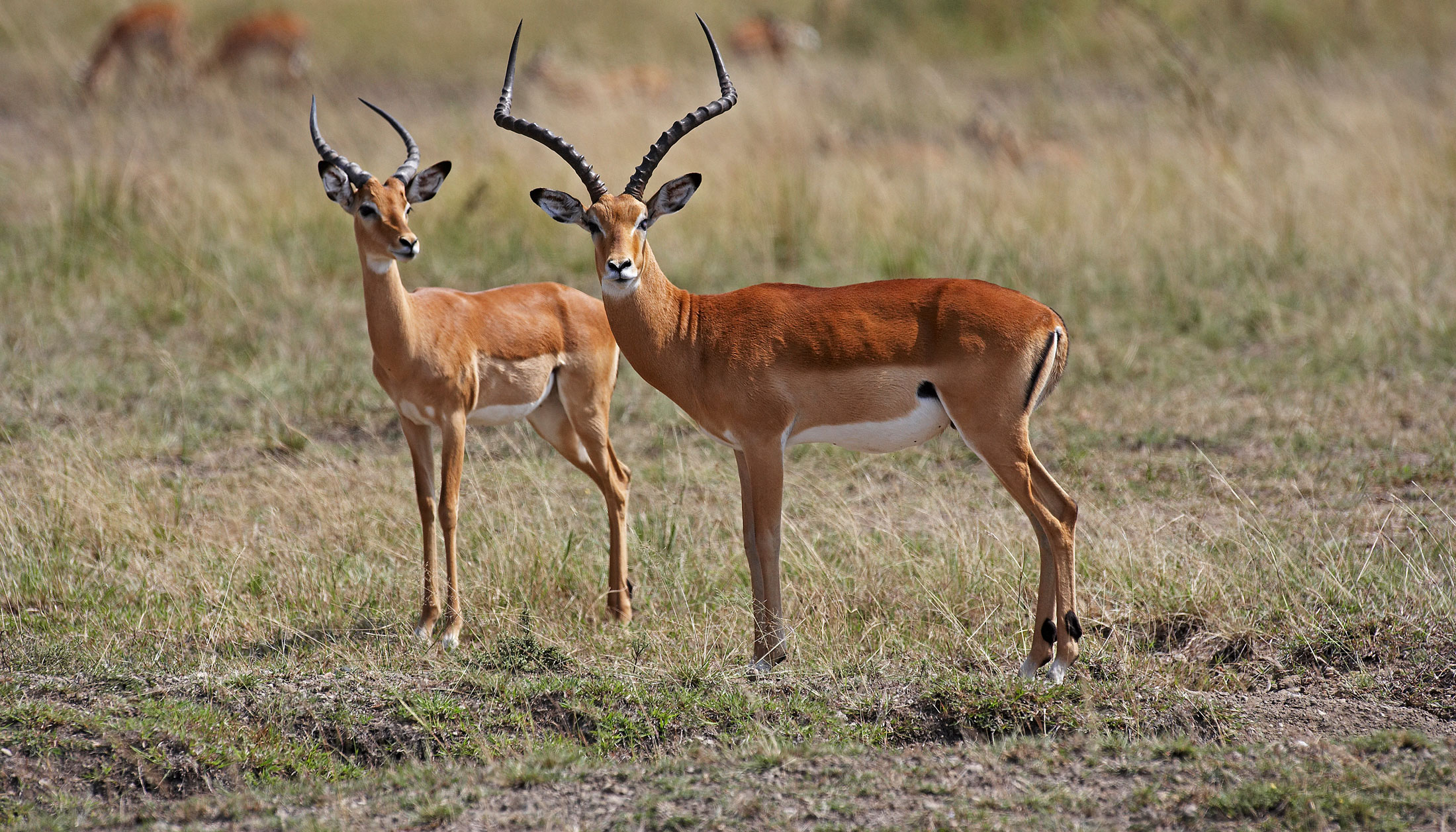





The impala (Aepyceros melampus) is a graceful medium‑sized antelope that inhabits the savannas and woodlands of eastern and southern Africa. Adults have a sleek reddish‑brown coat with a white belly and a pair of black stripes running down the haunches and tail. Males alone grow lyre‑shaped horns up to 90 cm long, while females are hornless. Impalas are renowned for their incredible agility—when startled, they can leap three metres high and more than ten metres in a single bound—and their tendency to congregate in large herds makes them one of Africa’s most popular plains‑game trophies.
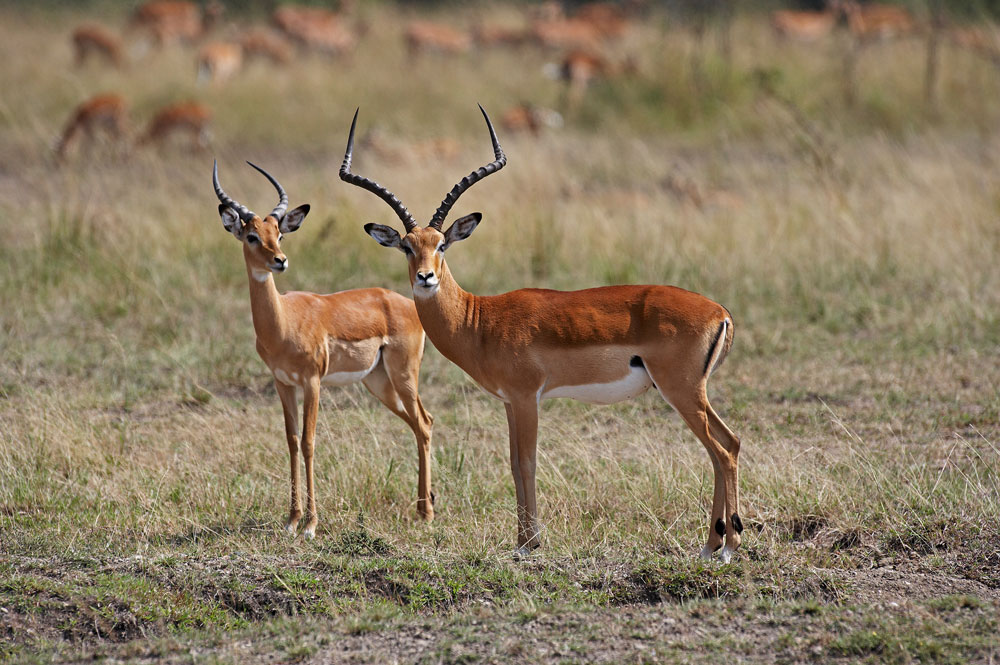
Impala hunting takes place primarily during the cool hours of dawn and dusk when herds emerge from thick bush to feed. Guides often glass from koppies or vehicle roofs to locate a suitable ram, then stalk through mopane or acacia woodland using cover to break the impala’s keen eyesight. Shots are usually taken at 80–150 yards with a .243–.270‑calibre rifle; hunters must be prepared for quick follow‑up shots because spooked herds move swiftly and rarely stop for long. There is no closed season for impala in most countries, though the dry winter months provide better visibility and more predictable patterns around waterholes.
Common impala populations are stable with an estimated two million animals; roughly half occur on private lands and about a quarter in protected areas. The species is listed as Least Concern, but habitat fragmentation, road development and bushmeat poaching pose local threats. The black‑faced impala, endemic to northwest Namibia and southwest Angola, is considered Vulnerable; its limited range and interbreeding with common impala prompted translocation to game ranches and strict management. Regulated trophy hunting generates revenue for anti‑poaching and encourages landowners to maintain habitat, ensuring that both the East African and Southern subspecies continue to thrive.
Impalas are browsers and grazers that rarely stray far from water. They live in three social units: territorial rams defend small breeding territories during the rut, bachelor herds roam more widely, and female herds with young can number from 15 to over 100 animals. During the wet season, females give birth synchronously, hiding their fawns for several days before rejoining the herd. Interesting behaviours include mutual grooming, the ability to delay birth until conditions are favourable and recognition of other species’ alarm calls, which helps them detect predators.
Impala can be found in the following location:
Impala has the following variations:
- East African Impala
- Southern Impala
- Black Faced Impala
Start Your Adventure