

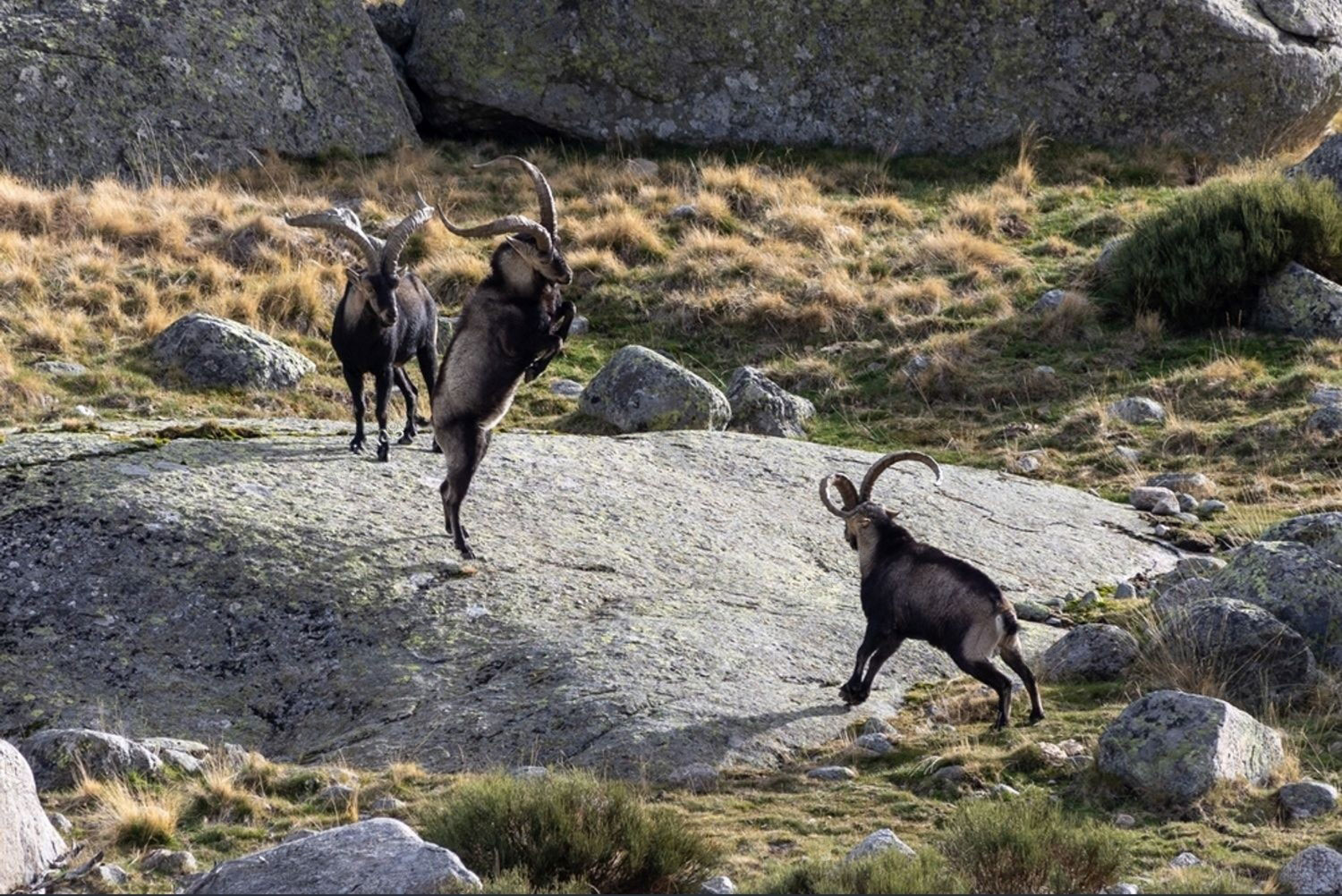





The Gredos ibex is one of four expressions of the Spanish ibex and is renowned for its impressive lyre‑shaped horns. After the Beceite ibex, the Gredos race is the largest and darkest and sports horns with pronounced curves and a spiral turn of more than 180 degrees; the horns taper from a thick base to a very thin tip. These magnificent animals inhabit the Sierra de Gredos west of Madrid, and their size, dark coat and sweeping horns make them one of Spain’s most sought‑after mountain trophies.
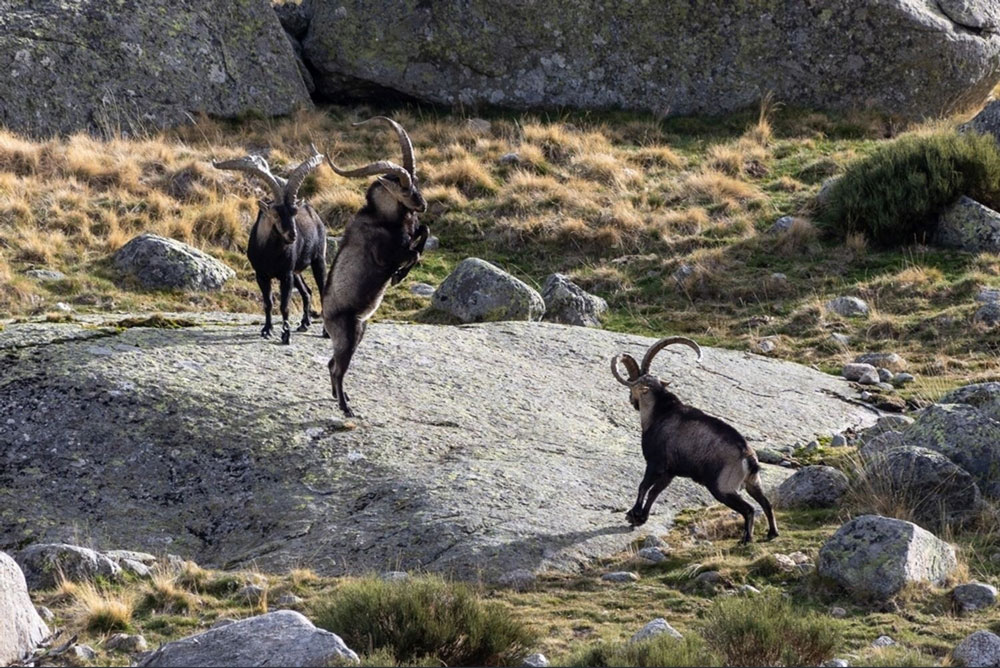
Gredos ibex hunts take advantage of the longest season of any Spanish ibex, typically running from early September through late June, with the rut in late November and early December. Hunters rise before dawn to climb into the high country and glass for ibex feeding in the morning and evening. Midday siestas are common because the animals bed down and become difficult to spot. This is a classic mountain spot‑and‑stalk hunt: guides use binoculars to locate rams, then close the distance on foot over rocky slopes and brushy benches. Although the Sierra de Gredos is accessible from major cities, the hunt demands stamina and careful shooting.
The Iberian ibex as a species has made a strong comeback; conservation assessments estimate roughly 50,000 individuals across Spain, with well‑managed populations in the Gredos, Beceite, Ronda and southeastern ranges. Ronda and southeastern ibex belong to one subspecies, while Gredos and Beceite form another, but trophy books list them separately because of their dramatically different horn shapes. Spain’s advanced game management system regulates harvests through quotas and auctions, and trophy fees fund habitat restoration and research. This has allowed the Gredos ibex to thrive while maintaining hunting opportunities and protecting genetic purity.
The Gredos mountains offer a mosaic of ecosystems ranging from high, glaciated peaks to oak‑forested valleys. Although the typical horn conformation is a deep lyre with a spiral over 180 degrees, other shapes occur even within the same herd. Rams often descend to lower slopes in winter and ascend to alpine meadows in spring. Because the Gredos ibex has long been considered a royal game species, hunts are steeped in tradition and offer travellers a chance to combine stalking with visits to historic UNESCO‑listed cities.
Gredos Ibex can be found in the following location:
Gredos Ibex has the following variations:
- (Varieties to be confirmed)
Start Your Adventure