







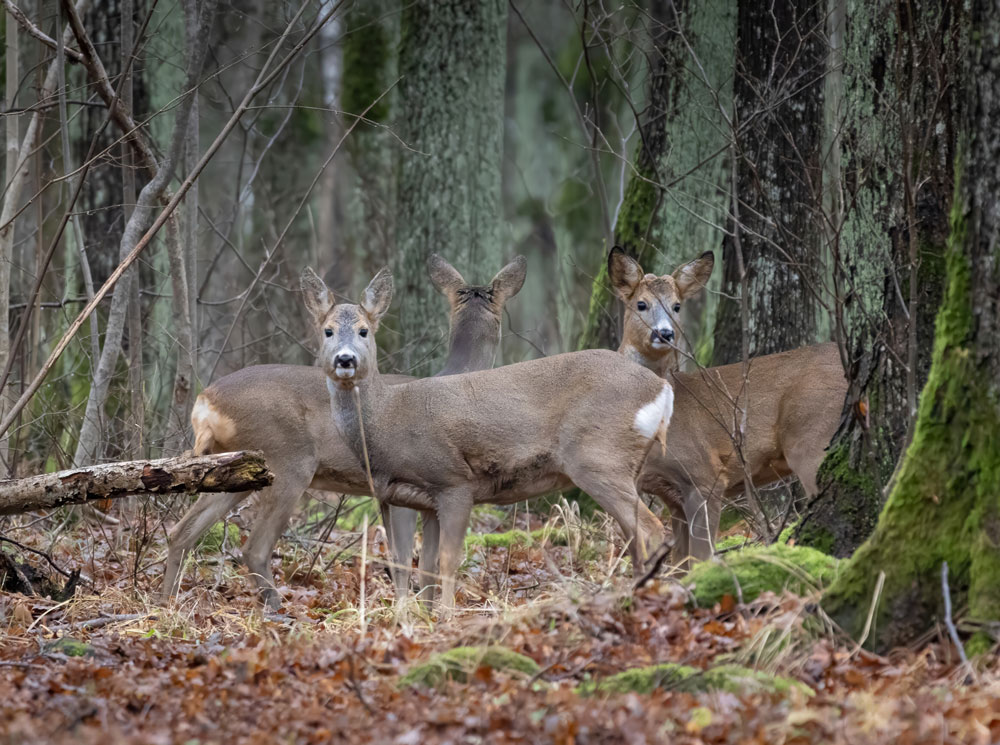
The Eurasian roe deer (Capreolus capreolus) is Europe’s smallest deer. Bucks stand about 66–86 cm at the shoulder and weigh 15–30 kg; does are slightly smaller. Their coat is bright rusty red in summer and dull slate grey in winter, and both sexes display a conspicuous white rump patch with no visible tail. Bucks bear short, pearled antlers with usually three points per side and shed them each autumn. The combination of delicate features, seasonal colour change and elusive behaviour makes the roe deer a classic quarry of European stalkers.
Roe deer are most active at dawn and dusk, making the early hours of May and late summer evenings prime times for hunting. In countries such as Poland, the roebuck season runs from 11 May until the end of September, with the rut occurring from mid‑July through mid‑August when bucks respond to calls. Hunters typically stalk along woodland edges and crop fields or wait in raised hides positioned according to deer movements. Because roebucks are territorial and constantly patrol their boundaries, calling with bleats or squeaks can lure them into the open. Shots are often taken between 50 and 150 m with light calibres such as the .243 Winchester.
The roe deer is listed as Least Concern and has flourished thanks to reforestation, agricultural abandonment and predator control. Two species are recognised: the smaller European roe deer and the larger Siberian roe deer (C. pygargus), weighing up to 50 kg. Nonetheless, local populations can be threatened by road collisions, intensive farming and poaching. Carefully regulated hunting provides an important management tool: quotas prevent overpopulation and help maintain balanced sex ratios, while trophy fees support habitat conservation.
Roe deer exhibit delayed implantation: eggs fertilised during the rut do not implant until January, resulting in fawns being born in late May or early June. Bucks mark territories with scent and produce a dog‑like bark when alarmed. During harsh winters or in open farmland, roe may form loose groups, but in summer they live singly or in small family units. Their ability to disappear silently into dense cover and leap over obstacles makes them a challenge even for experienced stalkers.
Eurasian Roe Deer can be found in the following location:
Eurasian Roe Deer has the following variations:
- (Varieties to be confirmed)
Start Your Adventure