
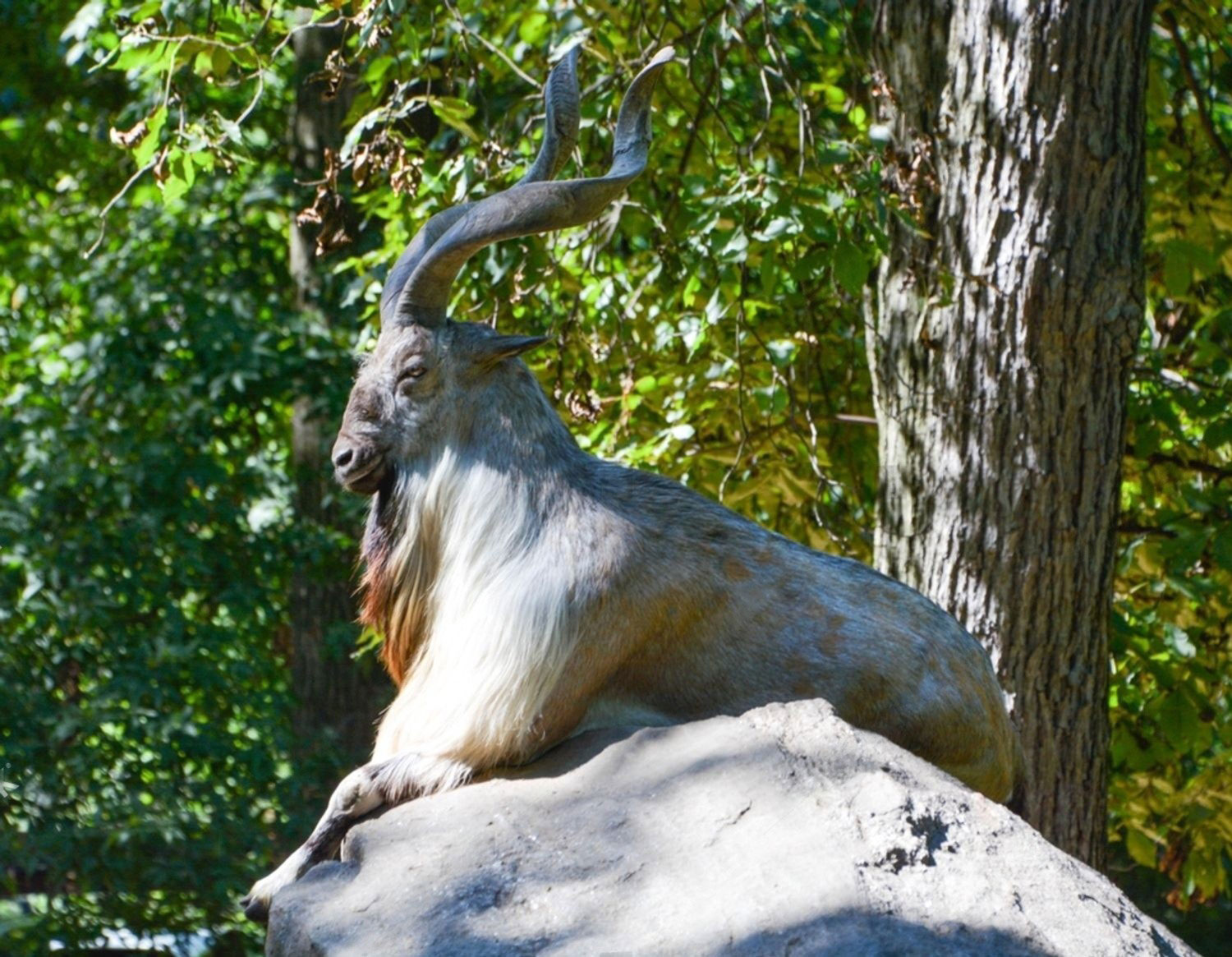




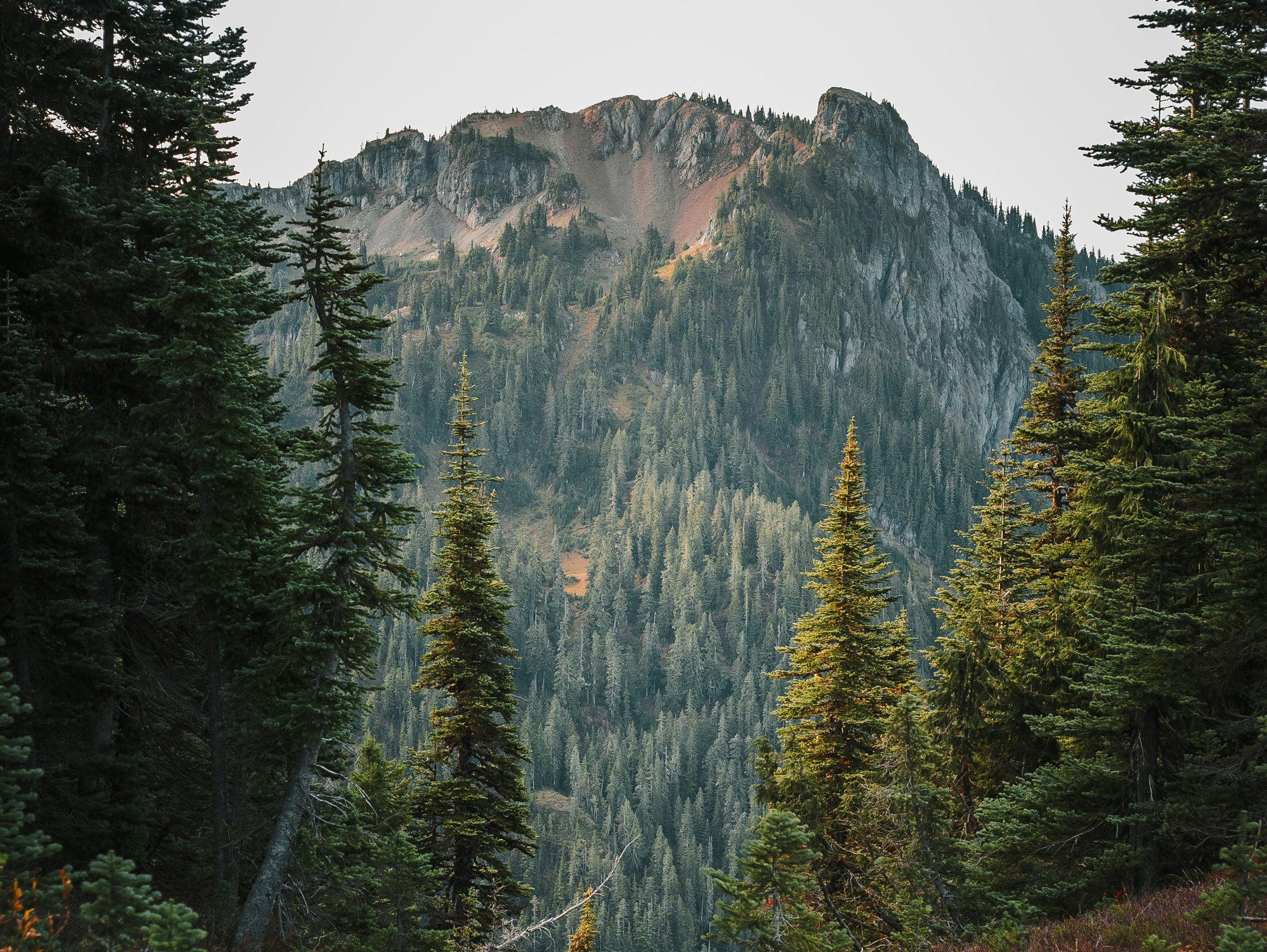
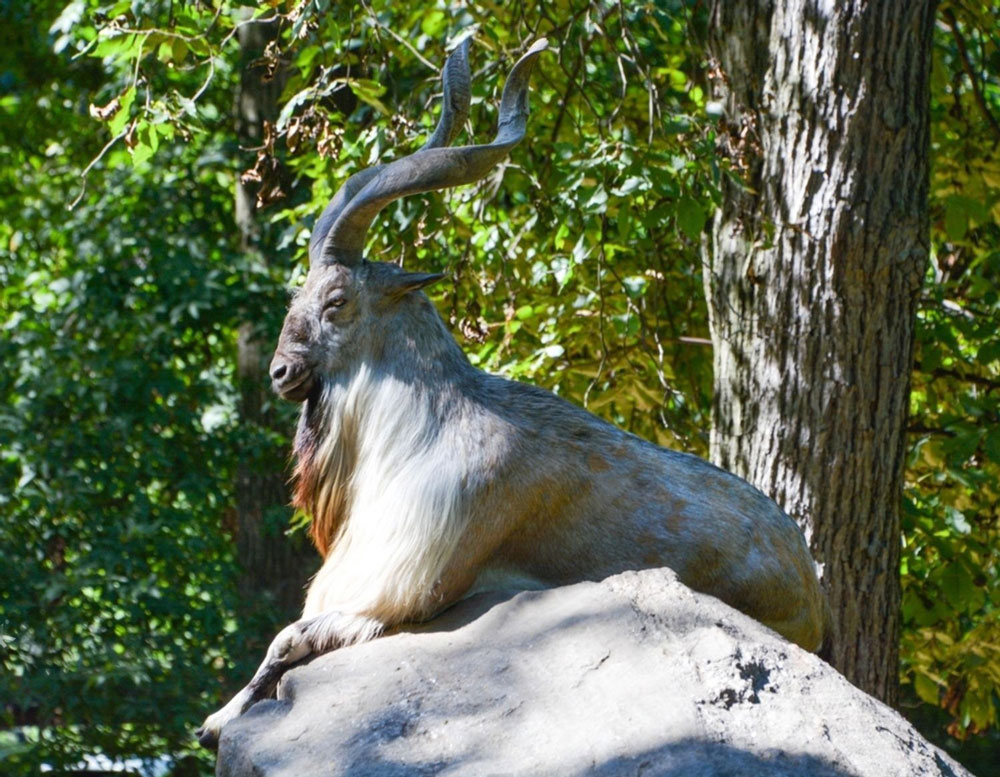
The Bukharan ibex (Capra sibirica subspecies) inhabits the rugged mountains of southwestern Tajikistan along the Panj River. Mature males develop impressive scimitar‑like horns, and the goats thrive on steep cliffs at altitudes above 12,000 ft. Their remote habitat and spectacular horns make this ibex a prized trophy for hunters seeking an extreme mountain challenge.
Hunting takes place from 1 September to 28 February. Guides drive four‑wheel‑drive vehicles into high valleys and then use horses or continue on foot to glass rock faces for mature billies. Base camps are usually located around 12 000–13 500 ft, and final stalks can climb to 14 000 – 15 000 ft, where long‑range shots across open basins are common. The thin air and rugged terrain demand excellent physical condition and patience.
Bukharan ibex are managed through Tajikistan’s community‑based conservation programme. Local conservancies oversee approximately 420 000 hectares, employ rangers and set quotas. Hunting licences, auctioned annually, generate about US$2 000 per ibex hunt; thirty percent of the revenue funds community projects while the remainder supports ranger wages and anti‑poaching. By engaging residents in monitoring and benefitting from trophy hunts, populations have rebounded and sustainable use has gained widespread support
Bukharan ibex hunts are often paired with Marco Polo argali hunts; hunters may spend several days riding and glassing before committing to a final ascent. Early winter storms can hinder travel but also drive billy goats to lower elevations and concentrate them during the rut. Ibex meat is a local delicacy, and their horns are symbols of strength and status in Tajik culture. Because of the remote location, hunters should be prepared for long travel times and minimal comforts.
Bukharan Ibex can be found in the following location:
Bukharan Ibex has the following variations:
- (Varieties to be confirmed)
Start Your Adventure