
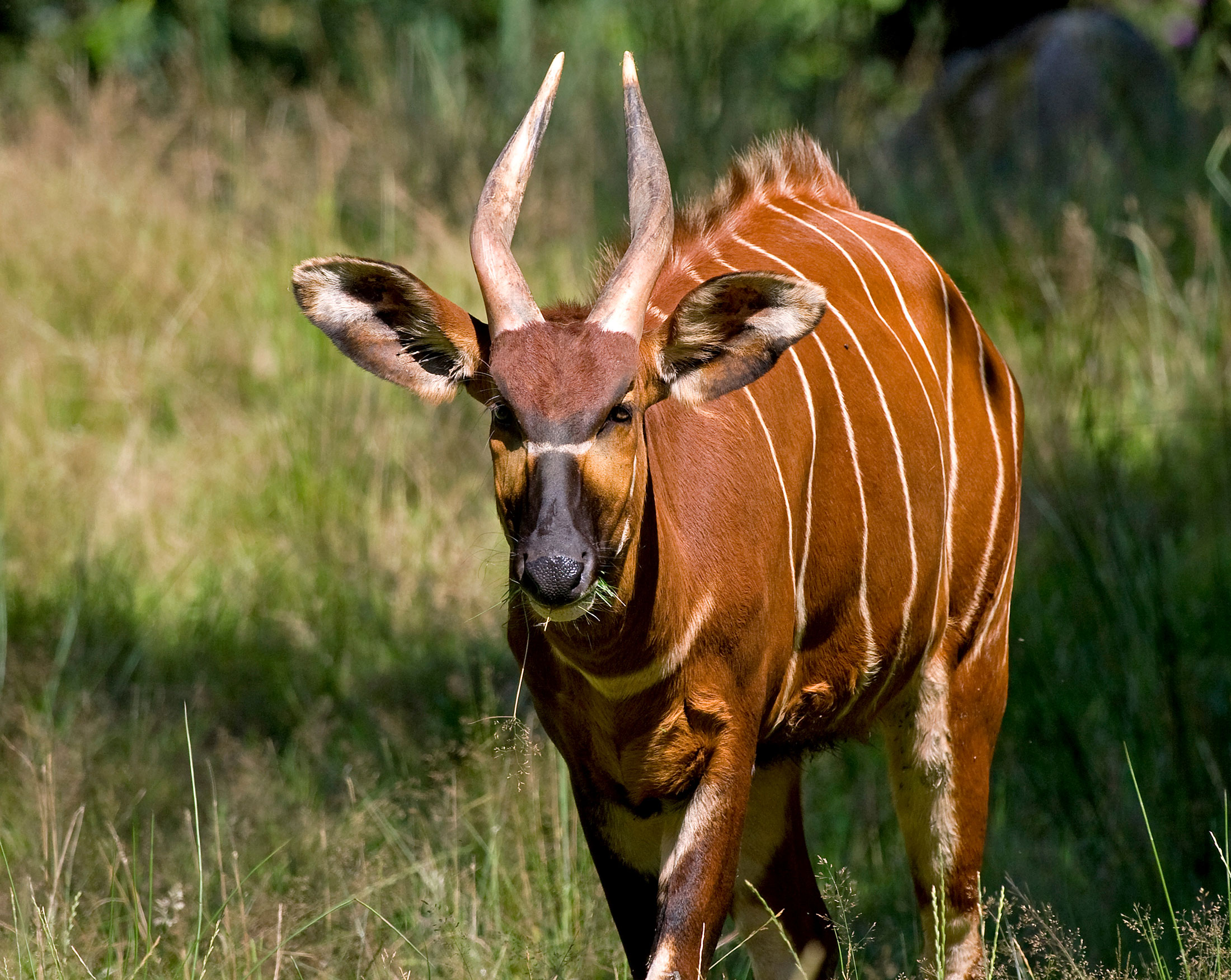




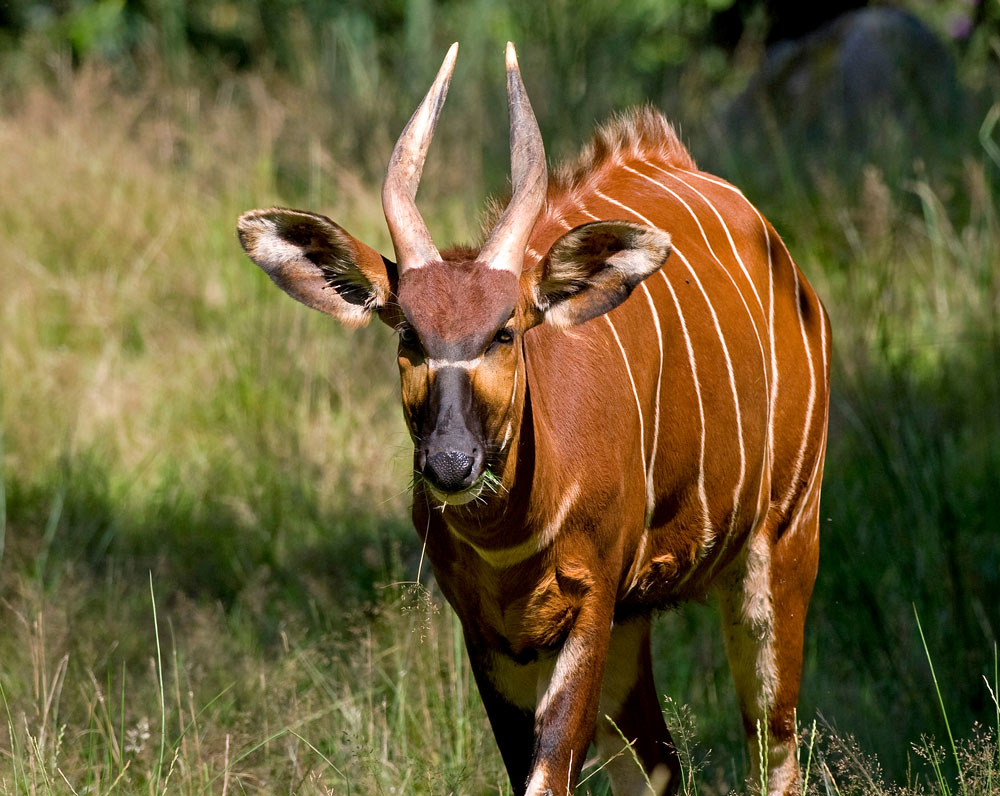
The bongo (Tragelaphus eurycerus) is the largest and most colourful of Africa’s forest antelopes. With striking orange‑red coats and white stripes, both sexes carry heavy spiral horns. Bongos range from Sierra Leone eastward through Liberia, Ghana, Cameroon, the Central African Republic, Gabon and into southern Sudan and the DRC. Males can weigh up to 450–475 pounds, and their elusive rainforest existence makes them a highly sought‑after trophy.
Bongo hunts are challenging because the animals are shy, nocturnal and spend daylight hours deep in the forest. Tracking usually begins at first light near salt or mineral licks where bongos feed; hunters follow fresh spoor through the jungle until midday when the animals bed down. In Central Africa, outfitters commonly build blinds at salt licks and hunt during the dry seasons (December–March or June), allowing hunters to ambush bongos that come to feed. Another method in Cameroon and CAR uses trained Basenji dogs and local Pygmy trackers: the dogs bay the bull until a tracker calls them off so the hunter can take a clear shot. Success depends on rainfall; fresh showers clear old tracks and draw bongos to salt licks, whereas dry spells make tracking almost impossible.
Bongo numbers have declined due to habitat loss and bushmeat hunting, but regulated trophy hunts provide incentives for conservation. In Cameroon, hunting operates within Zones d’Intérêt Cynégétique (ZICs) and community‑managed ZICGCs where hunters must obtain licences and follow strict quotas. Trophy fees are shared with local communities, funding schools and health clinics and encouraging villagers to protect wildlife. Concessions limit the number of bongos taken each year, and outfitters often employ local Baka trackers, ensuring traditional knowledge is valued and income flows to indigenous peoples. This sustainable model helps maintain bongo populations while supporting rural livelihoods.
Bongo horns grow quickly—within three years they can exceed 24 inches and may be vertically symmetrical or form a rarer lyre shape. Bongos are water‑dependent and congregate at mineral licks because their forest diet lacks salt. Hunting areas in Cameroon’s East Province rely on old logging roads to access remote forests; the best times are during the rainy season in early April when rains dampen noise and animals move more. Dedicated bongo hunts typically last two to three weeks and may also provide opportunities for forest elephant, sitatunga or other forest species
Bongo can be found in the following location:
Bongo has the following variations:
- (Varieties to be confirmed)
Start Your Adventure