

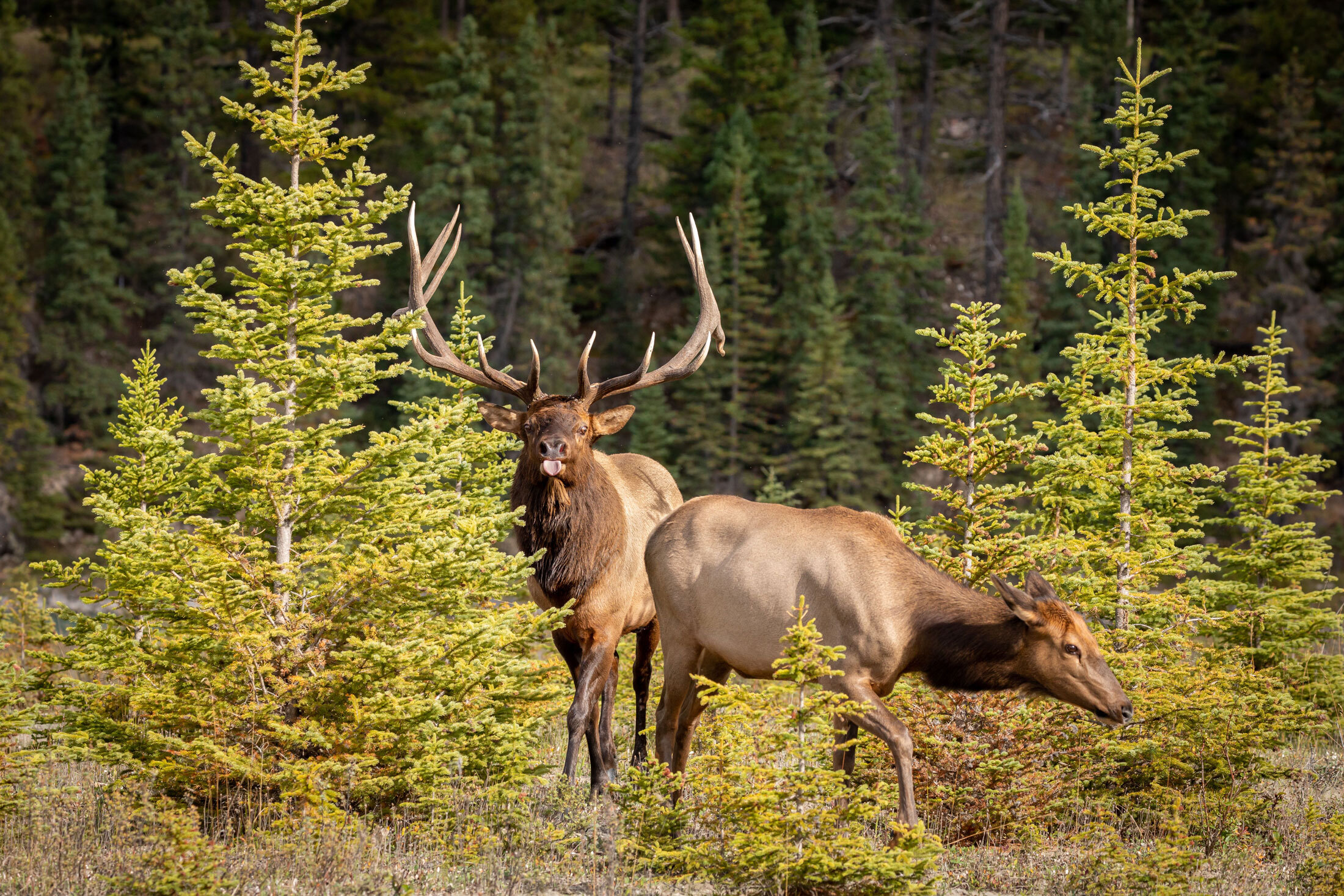





The Rocky Mountain elk (Cervus canadensis nelsoni) is one of North America’s most iconic big‑game animals. Mature bulls stand up to 60 inches at the shoulder and may weigh as much as 750 pounds, while cows weigh around 500 pounds. Bulls carry the largest antlers of any elk subspecies—spreading more than five feet across—and these are shed each late winter. Dark heads, lighter bodies and pale rumps give them a striking appearance, and the males’ high‑pitched bugle reverberates through mountain valleys during the autumn rut.
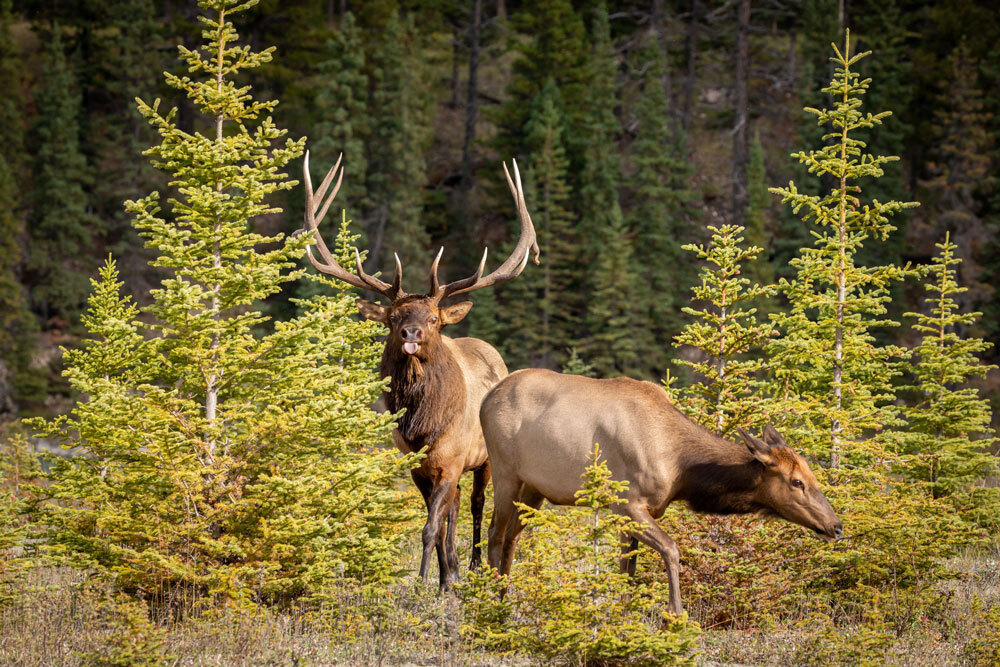
Elk hunts occur primarily in the fall, coinciding with the rut when bulls vocalise and gather harems. The Washington Department of Fish and Wildlife describes three main techniques: spot‑and‑stalk involves glassing open meadows and timber edges before closing the distance on foot; stand hunting places hunters along trails, feeding sites or waterholes to ambush travelling elk; and still hunting requires moving slowly and quietly through elk habitat to see a bull before it detects the hunter. Many hunters use cow calls or bugles to provoke a response, and archery, muzzleloader and rifle seasons are regulated separately. Because elk inhabit rugged mountains and high forests, hunts demand stamina and the ability to judge antler size quickly.
Rocky Mountain elk are one of four North American subspecies; others include Roosevelt, Tule and Manitoba elk. After near‑extirpation in the 19th century, populations rebounded through translocations and regulated hunting. State agencies now manage harvest quotas to balance elk numbers with habitat capacity and reduce crop damage. Bulls are legal only during designated seasons and must often meet antler‑point restrictions. Conservation initiatives funded by licence fees and non‑profit groups (e.g., Rocky Mountain Elk Foundation) support habitat restoration and migration corridor protection.
Elk are grazing herbivores that feed on sedges, grasses, forbs and, in winter, twigs and needles of trees. The name “wapiti,” derived from a Shawnee word meaning “white rump,” refers to the pale patch on their hindquarters. Bulls grow antlers rapidly through summer—each set can weigh around 40 pounds—and use them to spar for dominance during the rut. Predators include wolves, cougars, bears and coyotes. Elk remain a cultural symbol of the American West, drawing hunters and wildlife watchers alike.
Rocky Mountain Elk can be found in the following location:
Rocky Mountain Elk has the following variations:
- (Varieties to be confirmed)
Start Your Adventure