

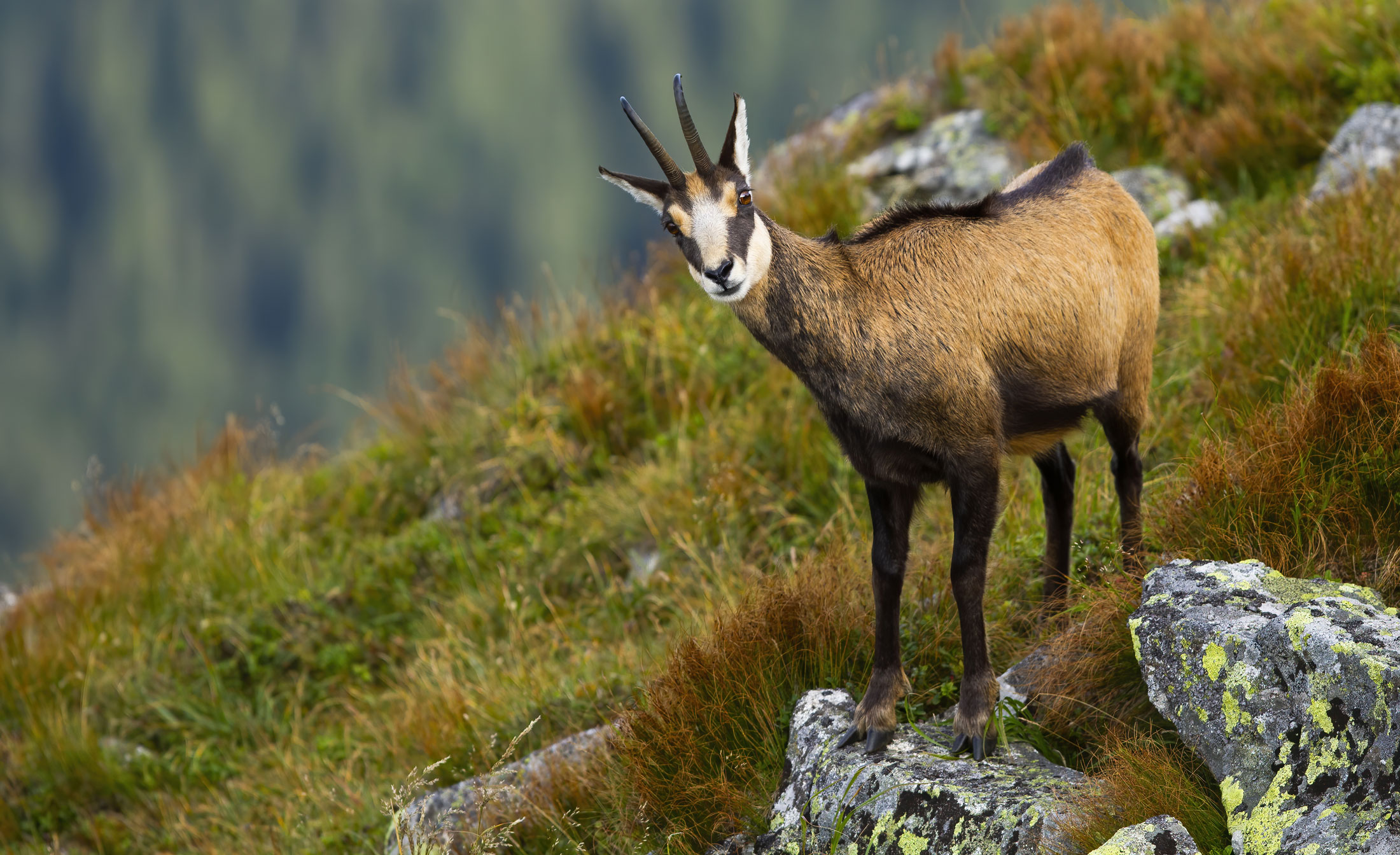





The chamois (Rupicapra rupicapra) is a nimble goat‑antelope native to Europe’s mountain ranges and introduced to New Zealand. Adults weigh 25–50 kg and stand 70–80 cm at the shoulder; their coat ranges from chestnut to dark brown with a pale rump and a distinctive dark facial stripe. Both males and females bear slender horns that rise vertically before hooking backward at the tips. Chamois hooves are exceptionally sure‑footed, allowing them to bound across cliff faces, making a mature “buck” an elusive and coveted trophy.
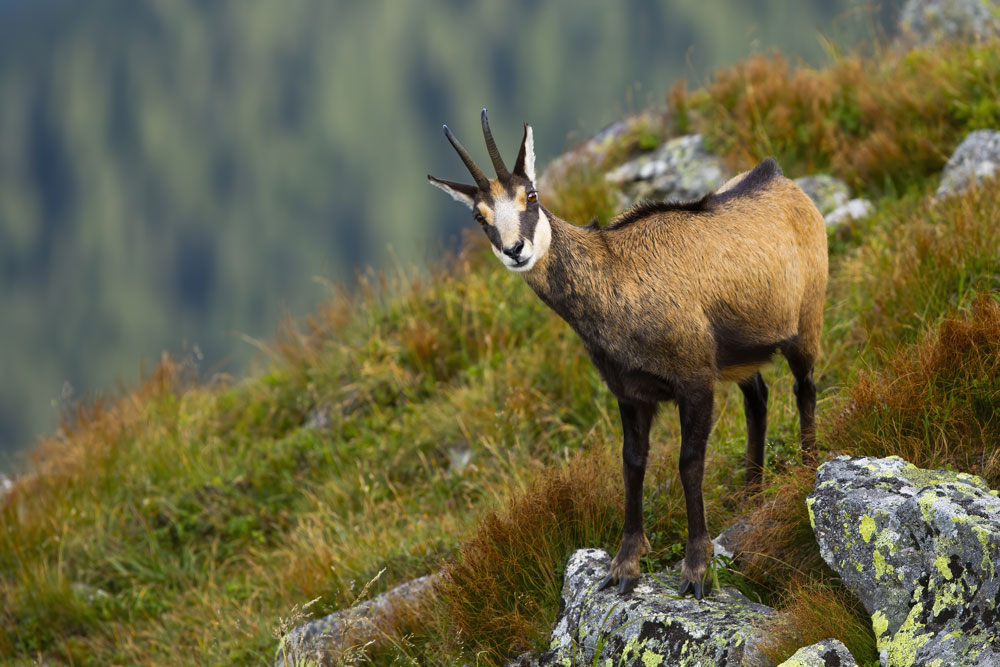
Chamois hunting is a classic alpine pursuit best undertaken from September through January, with the rut in November–December offering the greatest chance to intercept mature males. During summer, these animals graze high above the timberline on alpine meadows, but as snow deepens, they descend into subalpine forests and rocky gullies. Hunts typically involve steep pre‑dawn climbs to ridges, glassing expansive slopes and then carefully stalking down to within shooting range; keen eyesight and an acute sense of smell often necessitate longer shots. In heavily forested regions, guides may also employ high seats or driven hunts when chamois descend to browse in clearings.
Chamois are listed as Least Concern by the IUCN, and populations are generally stable across Europe and New Zealand. However, management differs by region: some subspecies such as the Pyrenean and Cantabrian chamois have recovered from sarcoptic mange outbreaks, while others like the Balkan and Carpathian chamois are carefully managed through quotas and limited seasons. Hunting licences and community‑led conservation projects fund monitoring programmes and habitat protection, ensuring sustainable offtake and preservation of alpine ecosystems. Ten subspecies are recognised, including the Pyrenean, Cantabrian, Alpine, Balkan, Carpathian, Anatolian, Caucasian, South Pacific (New Zealand), Lower Tatra and Chartreuse chamois.
Chamois are diurnal, feeding on grasses, herbs and shrubs in early morning and late afternoon and resting during midday. Kids stay with their mothers for the first year, and family groups communicate with high‑pitched whistles; a loud whistling alarm by one animal will send the entire herd scrambling for safety. The elastic tendons in their hind legs allow them to jump gaps of several metres, and their horns grow continuously throughout life, showing growth rings that reveal age. In the Alps, successful chamois hunters often display horn trophies on wooden plaques as part of traditional mountaineering culture.
Chamois can be found in the following location:
Chamois has the following variations:
- Pyrenean Chamoi
- Cantabrian Chamois
- Alpine Chamois
- Balkan Chamois
- Carpathian Chamois
- Anatolian Chamois
- Caucasian Chamois
- South Pacific Chamois
- Lower Tatra Chamois
- Chartreuse Chamois
Start Your Adventure