
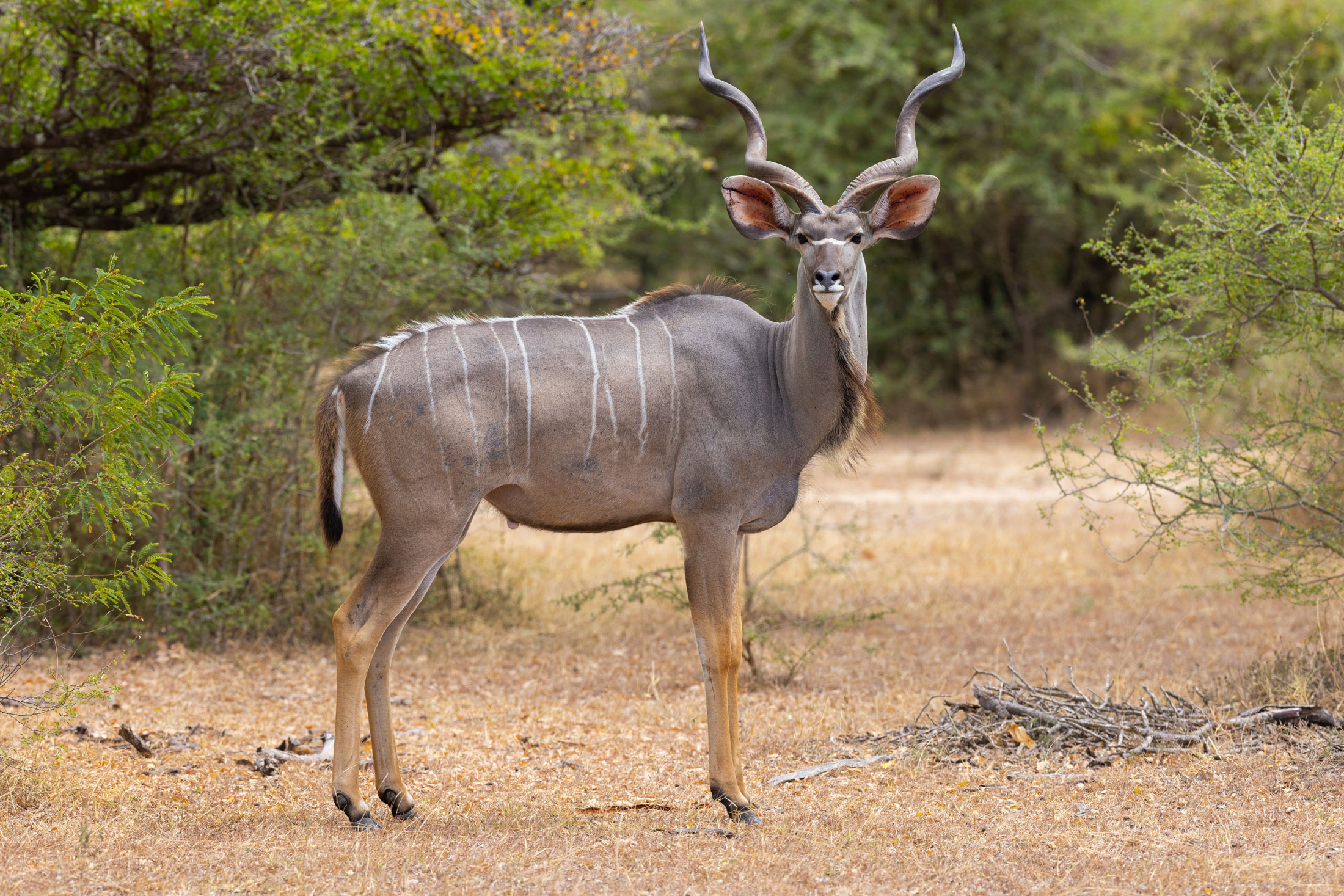





Often called the “grey ghost” of Africa, the greater kudu is revered for its impressive spiralling horns and elusive behaviour. This large antelope inhabits thick bushveld, riverine forests and broken hillsides across southern and eastern Africa. Its excellent senses and ghost‑like ability to melt into cover make pursuing a trophy bull one of Africa’s classic plains‑game challenges.
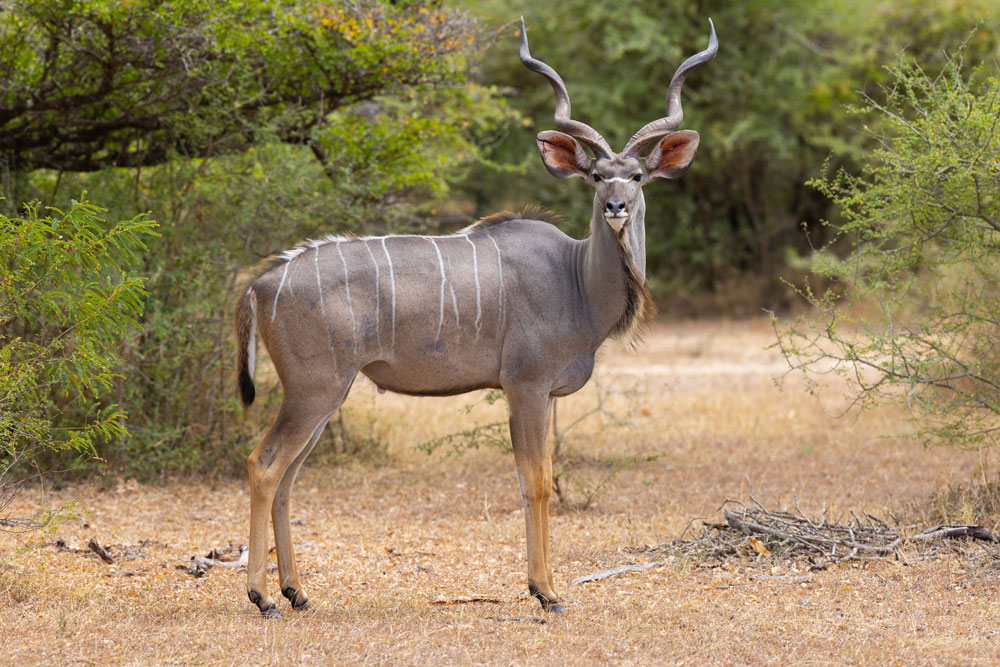
Kudu hunts are typically conducted on foot and require early starts and late finishes. Experienced trackers move slowly along game paths at dawn or dusk, pausing frequently to glass for the tell‑tale twist of horns above the brush. Glassing from ridges is common; once a bull is spotted, a careful stalk through thorn scrub is required. Bulls favour broken, brushy terrain and can vanish quickly when pressured, so patience and quiet movement are essential. Though often taken incidentally on plains‑game safaris, dedicated kudu hunts focus on finding an older bull with thick, tightly curled horns.
Sustainable kudu management relies on science‑based quotas and professional outfitters. The species has numerous recognised subspecies—southern, Eastern Cape, East African, Abyssinian and western—and each occupies distinct habitats across Africa. Hunters pursuing East African or Abyssinian kudu must obtain longer licences and be prepared for remote concessions, while southern and Cape kudu are abundant in South Africa and Namibia. Through regulated hunting, revenues support habitat conservation and ensure that kudu populations remain robust across their range.
Greater kudu hunting seasons vary by country. In South Africa and Namibia they may be hunted year‑round, but the best time is during the dry winter months when foliage is sparse and bulls are more visible. East African kudu hunts in Tanzania require a 16‑, 21‑ or 28‑day licence. Kudu meat is excellent and is often used locally; the trophy horns are prized worldwide for their elegant spirals.
Greater Kudu can be found in the following location:
- South Africa
- Namibia
- Zimbabwe
- Zambia
Greater Kudu has the following variations:
- Southern Greater Kudu
- Eastern Cape Greater Kudu
- East African Greater Kudu
- Abyssinian Greater Kudu
- Western Greater Kudu
Start Your Adventure