
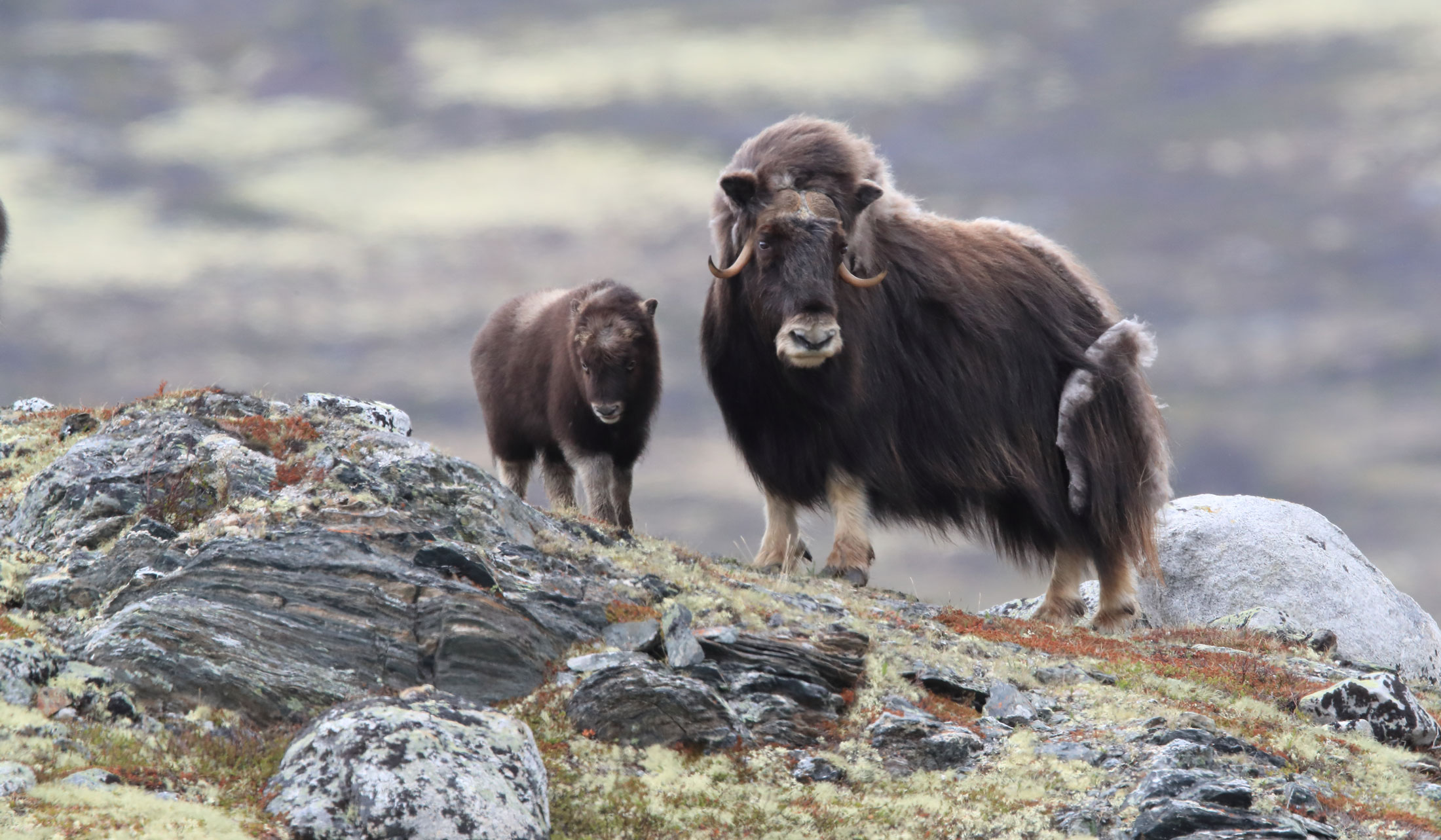



The muskox (Ovibos moschatus) is a stocky, long‑haired Arctic bovid known for its beard‑like guard hair and formidable horns. Inupiaq people call it “the animal with skin like a beard” because its coarse outer hair (qiviut) hangs almost to the ground. Mature bulls stand about 5 ft (1.5 m) at the shoulder and weigh 600–800 lb, while cows are smaller at roughly 4 ft high and 400–500 lb. Both sexes have horns that sweep down and out from the skull before curling upward; bulls’ horns are broader and heavier.
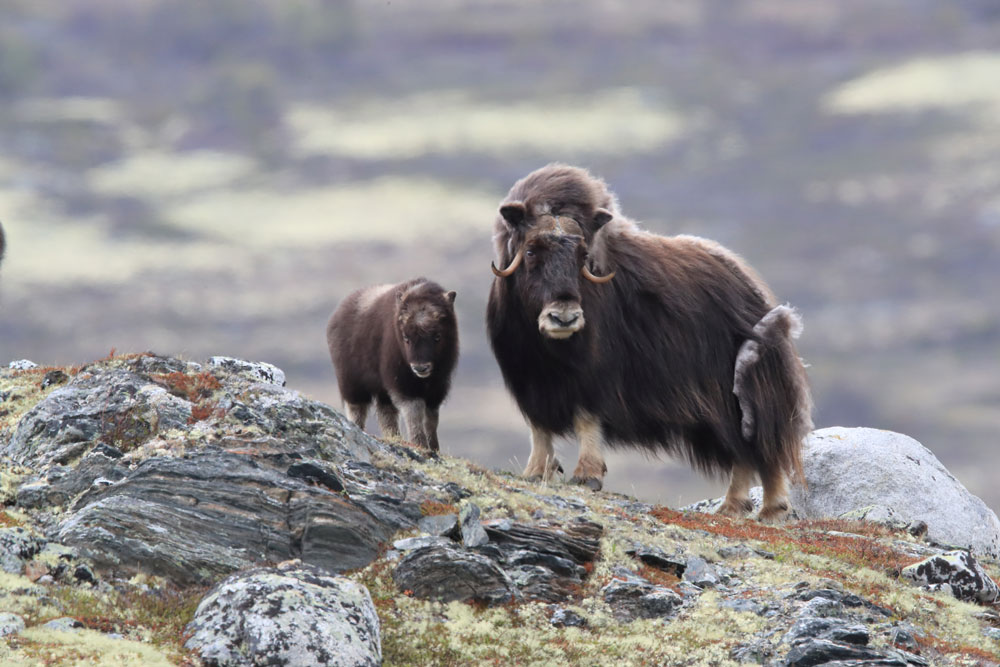
Muskox hunts in Canada’s Arctic are adventure expeditions. In Nunavut, spring hunts are based out of Baker Lake and use snowmachines to reach herds within 30–75 minutes of town; late‑summer and early‑fall hunts find the animals along lakes and rivers as they gather for the rut. The Baker Lake area hosts the Barren Ground subspecies, which is about 10–15 % larger in body and horn size than island muskox. Because the population is lightly hunted, success rates exceed 85 % and most trophies meet Boone & Crockett benchmarks. Hunters travel by snowmachine, stay in comfortable lodges, and typically stalk to within shooting range on foot.
Muskoxen once ranged across northern Europe, Asia and North America but disappeared from Alaska and most of Canada by the 1920s. In 1930, 34 muskox from East Greenland were transplanted to Alaska and formed the nucleus of today’s herds. Bulls breed several females between August and October; calves weighing 22–31 lb are born April–June and grow quickly to 150–235 lb by one year. Winter herds may include up to 75 animals, with harems of 5–15 females guarded by a dominant bull. Conservation programs monitor herd trends and limit harvest to ensure populations remain stable.
During the rut, bulls battle by charging head‑on at 20–30 mph and clashing horn bosses; their skulls are reinforced with four inches of horn and three inches of bone to protect the brain. Muskoxen feed on grasses, sedges, forbs and woody plants in summer and shift to browsing in winter. Their cloven hooves and thick underwool enable them to thrive in extreme cold, and the qiviut shed each spring is one of the world’s warmest natural fibres.
Muskox can be found in the following location:
Muskox has the following variations:
- (Varieties to be confirmed)
Start Your Adventure