
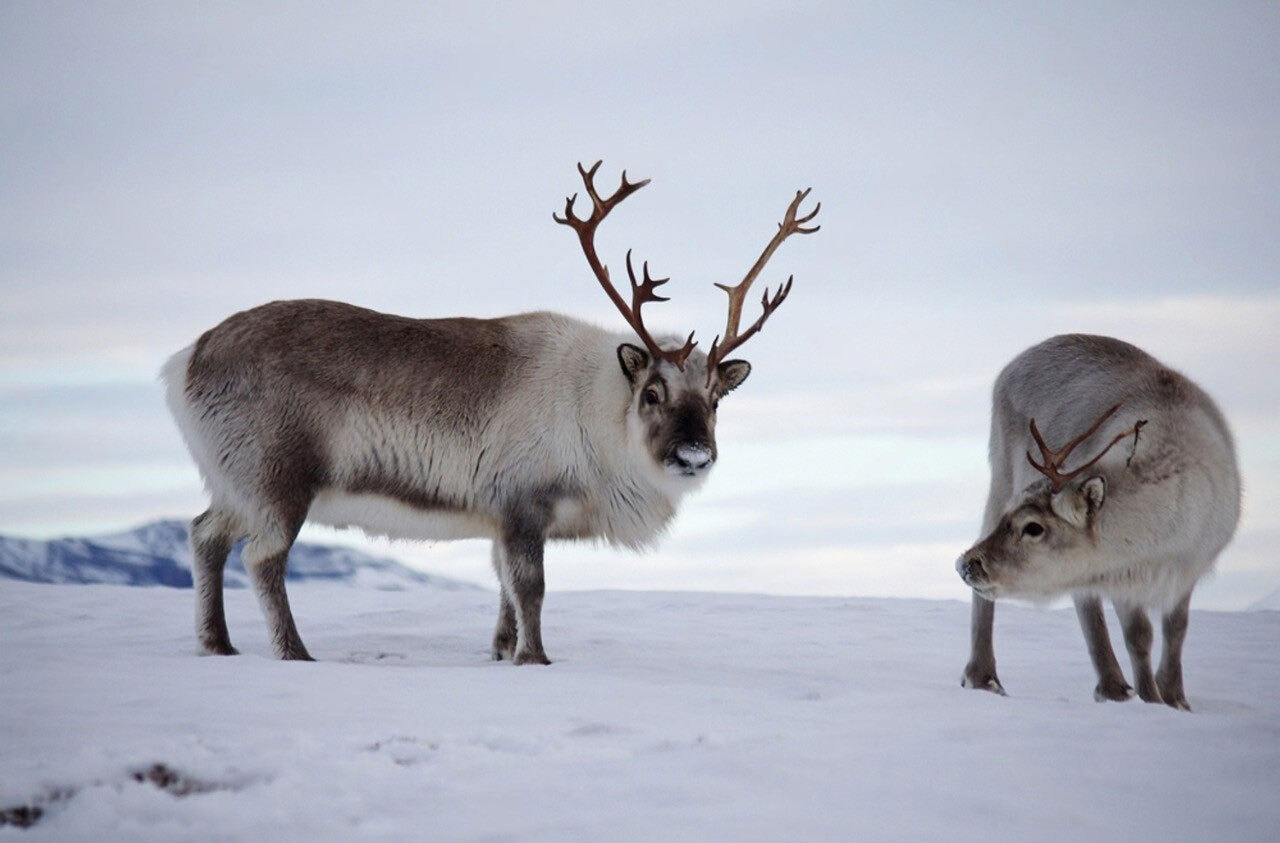





The Eurasian reindeer (Rangifer tarandus) is a medium‑sized deer native to the tundra and taiga of northern Europe and Asia. Reindeer are uniquely adapted to cold climates with a thick double coat, large rounded hooves and a specialised nasal structure that warms frigid air. Both sexes grow antlers—the only deer species to do so—with stags’ antlers reaching up to 130 cm and weighing as much as 15 kg, while females’ antlers are shorter (about 50 cm). These antlers and the long migrations of wild herds make reindeer hunts particularly appealing to hunters seeking a combination of cultural tradition and wilderness adventure.
Wild reindeer hunting in Europe is tightly controlled and limited to a few areas, most notably Iceland. In East Iceland the season runs from 10 July to 1 September, but most trophy hunts take place between mid‑August and early September when the velvet has been rubbed off. Approximately 1 200 tags are issued each year through a draw, and hunts last around five days with a professional guide. Hunters glass open mountainsides and high plateaus for mature bulls, then stalk carefully across rugged terrain to within shooting distance. Only slugs or medium‑to‑large calibre rifles are permitted, and success depends on patience, physical fitness and favourable weather.
Reindeer have been domesticated across northern Eurasia for millennia, but small wild populations remain in Norway, Iceland and parts of Russia. Their thick coats and hollow hair provide insulation and buoyancy, while large hooves act like snowshoes and paddles when crossing snow or marsh. Herds may consist of tens to hundreds of animals and migrate long distances in search of food, feeding on mosses, lichens, herbs and shrubs. Because both sexes grow antlers at different times—males drop theirs after the rut and females retain theirs through winter—sex and age must be carefully checked before shooting. Strict quotas and monitoring ensure that hunting does not jeopardise reindeer populations, and fees support conservation and local communities.
Reindeer are superbly engineered for Arctic life: their noses contain turbinate bones that warm cold air before it reaches the lungs, and their hooves change shape seasonally—broad and spongy in summer, sharp and rimmed in winter to grip ice. They can see ultraviolet light, allowing them to detect contrasts in snowy landscapes. Indigenous peoples such as the Sámi have herded and relied on reindeer for transport, meat and clothing for centuries, and modern hunts often draw on these traditions. In folklore, reindeer are best known for pulling Santa Claus’s sleigh, adding a touch of magic to the species’ story.
Reindeer can be found in the following location:
Reindeer has the following variations:
- (Varieties to be confirmed)
Start Your Adventure